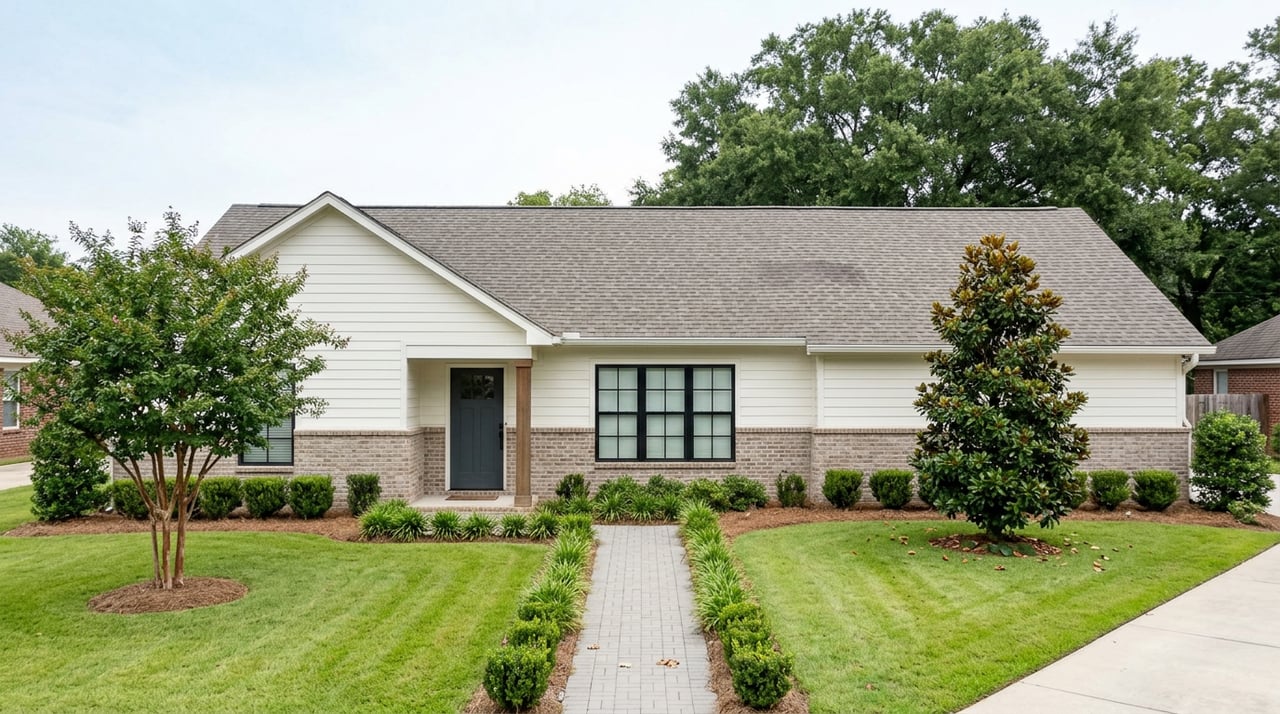
The Timeline Math Nobody Explains When You Sell a Warner Robins Home Before a PCS Report Date
September 24, 2026
September 24, 2026
Orders arrive with a report date, not a closing date. For a PCS home sale in Warner Robins, planning around that gap is an important part of getting the timing right.
A traditional listing here runs on its own clock. You prep the house, it sits on Central Georgia MLS for a stretch, a buyer goes under contract, and then thirty to forty-five days pass before anyone signs at the closing table. Add those pieces together in today's market and a family that lists the day orders come in can easily be looking at seventy to eighty-five days before the sale is actually done, not counting the week or two of staging and photos before the listing even goes live. If your report date sits sixty days out, the math doesn't work unless you build the calendar in the right order.
Here's the part that catches people off guard: the pace that's still getting repeated around Warner Robins right now reflects spring, not September.
In March 2026, Central Georgia MLS data showed homes in Warner Robins closing in an average of 29 days, the fastest pace of any city in Houston County that month, on 67 closed transactions at a median price of $233,000. By May, the pace had already stretched to 44 days on 105 closed sales, with a median of $243,000. Redfin's data through July 2026 puts the trailing three-month median at $248,000, with homes now averaging 40 days on market, up from 35 days over the same stretch a year earlier, and with 339 homes sold in July compared to 378 in July 2025.
| Window | Median sale price | Avg. days on market |
|---|---|---|
| March 2026 | $233,000 | 29 days |
| May 2026 | $243,000 | 44 days |
| Trailing 3 months through July 2026 | $248,000 | 40 days |
None of this is a crash. Warner Robins still absorbs entry-level and VA-financed inventory faster than anywhere else in the county, and Robins Air Force Base's workforce grew roughly 11 percent over the past two years, with base leadership telling the 2026 State of the Base address that around 90 percent of that workforce lives off base in the surrounding community. That's steady demand. But steady demand at 40 days on market is a different planning problem than the 29-day pace people were quoting five months ago, and a PCS timeline built on outdated assumptions is the single most common way a sale runs past a report date.
The fix isn't complicated, but almost nobody does it in the right order. Most sellers start from the day they list and count forward. PCS sellers need to start from the report date and count backward.
Run those six steps against your actual report date and you'll know almost immediately whether a traditional listing fits, whether you need to list before you'd otherwise be ready, or whether renting becomes the more realistic option.
Here's the piece that changes the financial picture for a lot of PCS families, and it's the one general "how to sell your house" guides almost never mention.
Under IRC Section 121, a home seller can exclude up to $250,000 of capital gain, or $500,000 filing jointly, as long as they owned and used the property as a primary residence for at least two of the five years before the sale. PCS orders routinely break that test. A family gets moved after twelve or eighteen months in a home, and on paper it looks like they've disqualified themselves from the exclusion entirely.
Section 121(d)(9) exists specifically for this. The statute allows a taxpayer or their spouse serving on qualified official extended duty to suspend the standard five-year lookback period for up to ten years:
"any period (not to exceed an aggregate period of 10 years) during which the taxpayer or the taxpayer's spouse is serving on qualified official extended duty"
In practice, that means a family who buys near Robins, lives in the home for three years, then gets orders elsewhere and keeps the house as a rental for the next six years, can still elect this suspension and count those original three years toward the two-year use test, even though the standard five-year window would otherwise have closed long ago. According to SmartAsset, the suspension applies to service members stationed more than 50 miles from the home, or ordered into government quarters, for more than 90 days at a stretch.
This isn't automatic. It requires an election, and the details around depreciation recapture and how long the suspension can be layered onto later moves get complicated fast. It's a conversation for a CPA who works with military returns, not something to assume from a blog post. But knowing the mechanism exists is the difference between assuming you owe capital gains tax on a home you haven't lived in for years and finding out you may not.
Some families facing a tight PCS window decide to rent the house out instead of selling under pressure, especially if they think they might come back to Warner Robins later or believe the market still has room to run. It's a reasonable call, and the base's growth trajectory gives it some support. But if the home carries a VA loan, it's worth discussing the financing implications before you decide, not after you've already signed a lease with a tenant.
None of this replaces a conversation with a lender and a tax professional who understand how PCS orders interact with financing and capital gains. What it does is give you the right questions to bring into that conversation, instead of discovering the mechanism after the closing date has already come and gone.
Does the Section 121 military suspension apply to National Guard and Reserve members, or only active duty? The statute's qualified extended duty definition covers service members called to active duty for an indefinite period or for a specified period of more than 90 days, which can include Guard and Reserve members activated under those terms. Whether a specific set of orders qualifies is a determination worth confirming with a tax professional before relying on it.
What if I've already been renting the house out for years before I even start thinking about selling? The suspension can still apply, but the calculation gets more layered once depreciation has been claimed on the property. This is exactly the kind of case worth running past a CPA before listing.
Is renting automatically the safer choice if I can't sell in time? Not automatically. It solves the timeline problem but creates a different one around VA entitlement and long-distance landlord logistics. Which option actually costs less depends on your specific loan, your timeline to a next purchase, and how comfortable you are managing a rental from another duty station.
If your orders just landed and you're trying to figure out whether the calendar actually works, The Mack Team has walked enough Robins AFB families through this exact math to tell you quickly whether you're in good shape or need to adjust the plan today. Get your free, local home valuation and we'll build the backward calendar with you, report date first.
This article is general information, not legal, tax or financial advice. Consult a qualified professional about your situation.
Stay up to date on the latest real estate trends.

Join a team that values innovation, collaboration, and growth. Whether you’re a client seeking expert guidance or a professional looking to make an impact, we provide the support, resources, and expertise to help you succeed every step of the way.